
Tree Removal in Colorado Springs for hazardous trees threatening structures and property
Noland Land & Tree removes dead, diseased, and hazardous trees in Colorado Springs when their location or condition poses a threat to your home, power lines, or landscaping. You may have a tree leaning toward your roof after years of storm exposure, a diseased cottonwood dropping limbs into your driveway, or a dying pine too close to your foundation to fall safely on its own. This service addresses those situations by dismantling the tree in controlled sections, protecting what lies beneath, and clearing the site completely.
Tree removal typically involves sectional dismantling when space is tight or the tree stands near structures, fences, or gardens. Climbers remove the canopy in manageable pieces, lowering limbs with rigging to avoid damage to surrounding plants, walkways, or rooflines. When a tree exceeds the safe capacity for manual rigging or sits in an especially confined area, crane-assisted removal allows the team to lift sections over obstacles without ground impact. The trunk is then cut into sections and removed, and all debris is hauled off-site. You are left with an open space where the tree once stood, free of limbs, trunk wood, and scattered bark.
If a tree on your property shows visible decay, leans toward your home, or has already lost large branches, reach out to discuss removal options suited to the layout of your yard.
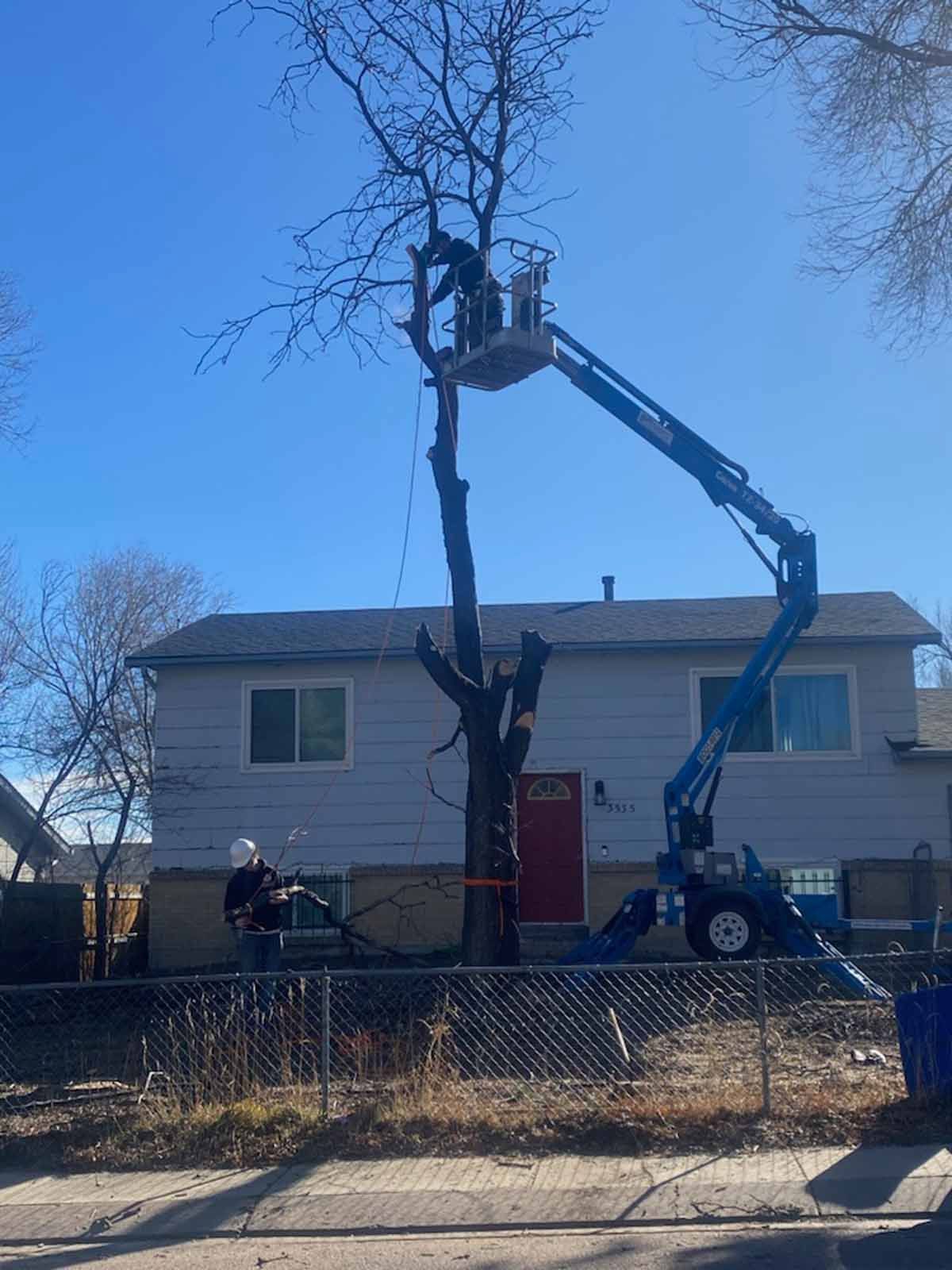
What Happens During Sectional Tree Dismantling
When a tree cannot be felled in one piece, the removal crew works from the top down, removing branches in stages before cutting the trunk into smaller sections. Ropes and pulleys guide each piece to the ground in a controlled descent, keeping the drop zone clear of gardens, irrigation lines, and paving. This method is common when working near homes, garages, or along narrow side yards where a full fall would cause structural damage.
After the tree is down, Noland Land & Tree hauls away all wood, limbs, and debris. You will notice the ground cleared, the stump flush-cut or left at a height you specify, and no scattered bark or branch litter across your lawn or driveway. The space becomes usable again for new planting, grading, or simply restoring sight lines across your property.
The crew also takes steps to protect surrounding landscaping during the work, laying ground protection where heavy equipment travels and repositioning rigging points to avoid damaging healthy trees or shrubs nearby. Crane-assisted removals are scheduled when access allows and the tree's size, lean, or proximity to structures makes manual rigging impractical. Not all removals require a crane, but the equipment is available when the job calls for it.
What to Know Before Scheduling Tree Removal
Homeowners in Colorado Springs often ask about timing, access, and what remains after the tree is gone, especially when dealing with large specimens near driveways or along property lines.
What happens to the wood after a tree is removed?
All trunk sections, limbs, and debris are hauled off-site as part of the service, leaving your yard clear and ready for the next use.
How do you protect landscaping during removal?
Ground protection mats are placed where equipment moves, and rigging is adjusted to keep falling limbs away from flower beds, shrubs, and hardscaping.
When is a crane used instead of manual rigging?
Cranes are brought in when a tree is too large to dismantle safely by hand, when it leans heavily toward a structure, or when ground access is limited and vertical lift is the safest option.
Why remove a tree that still has green leaves?
A tree may appear healthy in the canopy but show root rot, internal decay, or structural splitting that makes it unstable, particularly during high winds common along the Front Range.
How soon can the stump be ground after removal?
Stump grinding can occur immediately after the tree is removed or be scheduled separately, depending on your timeline and whether the area will be regraded or replanted.
If a tree on your property is leaning, losing bark, or standing too close to your home for comfort, contact Noland Land & Tree to schedule an assessment and discuss the removal approach that fits your yard layout and project goals.